
Home / Hydrostatic steering units
Actuation · Hydrostatic steering units
Hydrostatic steering units
A hydrostatic steering unit connects the steering wheel to the steering cylinders by oil alone. It meters the oil to the cylinders in proportion to wheel rotation. Read its marking, count its ports and send photos to FEK sales to identify the exact unit.
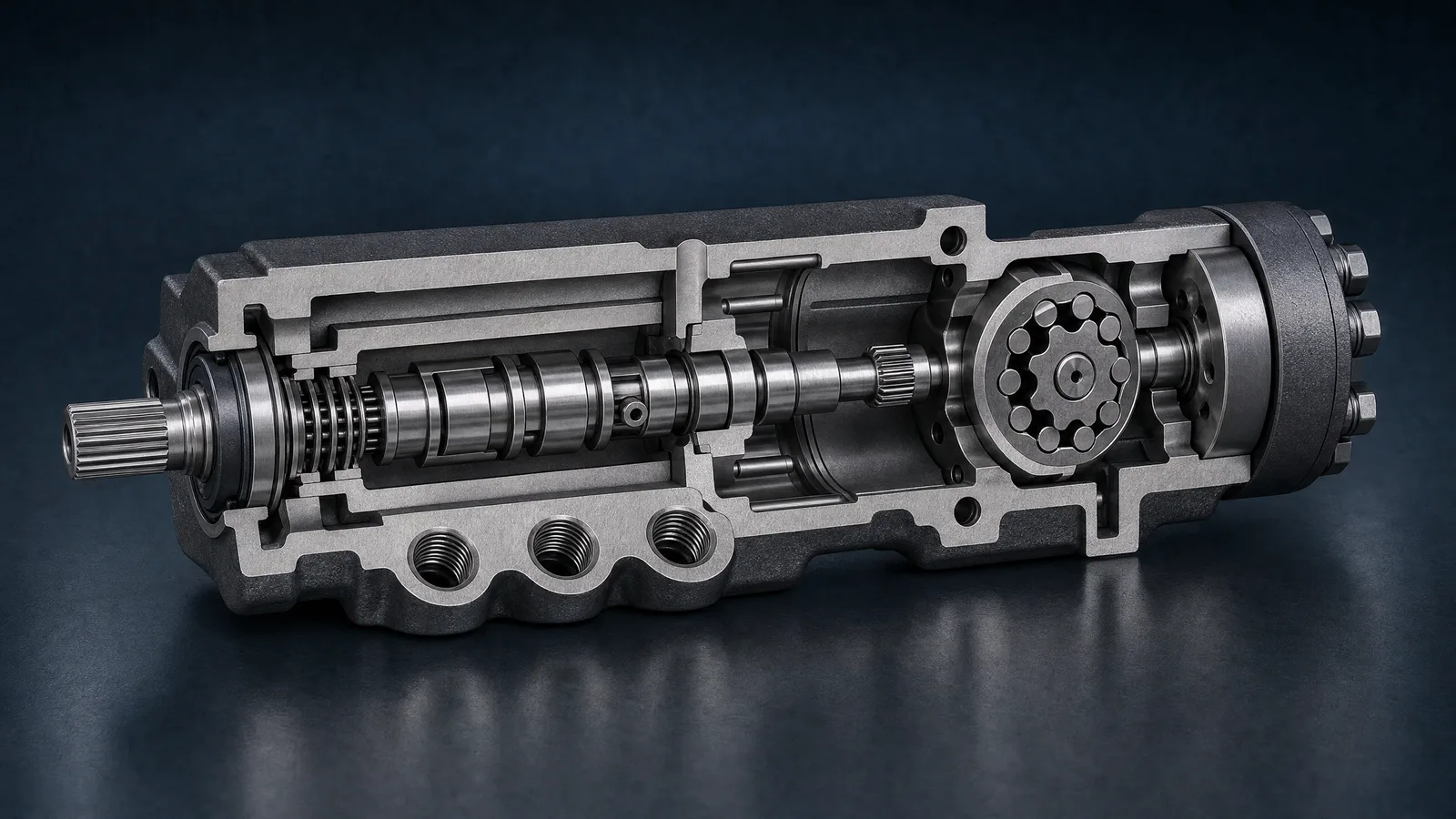
Function
What it does
A hydrostatic steering unit sits between the pump and the steering cylinders. Turn the wheel and the unit sends a measured volume of oil to one side of the cylinders, and the oil from the other side returns to tank. More wheel rotation means more oil and more steering angle. With no mechanical linkage between wheel and axle, the column can be placed freely in the cab.
Supply
How it is fed
The unit is usually fed from a priority valve, so steering has the first call on the pump flow and the remaining flow goes to the working hydraulics. In a load-sensing circuit the unit also returns an LS signal that sets the flow the priority valve gives.
Identification
What identifies a steering unit
Marking
Number or letters on the housing or nameplate, with any date or batch code.
Ports
Count and position of the ports: pump (P), tank (T), left and right steering cylinder ports (L, R), and an LS port if present. Read the letters stamped next to each port.
Port threads
Thread type and size of each port, as measured or read from the housing.
Circuit type
Open or closed centre. Load sensing or not. Read from the machine diagram or from the port count.
Mounting
Flange shape, bolt pattern and bolt count. Steering column side: shaft form, spline or key.
Displacement
The volume per wheel rotation, if marked. Do not estimate it.
Extras
Built-in relief or shock valves, check valves, any tag or label.
Machine
Make, model, year and steering cylinder arrangement.
Photographs
Photos that help
- The whole unit, from the shaft side.
- The housing side with the marking, in sharp light.
- The port face, with the letters visible.
- The mounting flange from the front.
- The hoses attached, before you remove them: which hose goes to which port.
Two numbers that look close are not the same part. FEK states that a unit matches another only after comparing ports, mounting and displacement.
Next