
Home / Hydraulic pumps
Pumps
The pump supplies flow. The load makes pressure.
How an axial piston pump works, how it differs from a gear pump, and which data on the nameplate decides selection.
Pump families
Two pump families
Gear pumps
Fixed displacement, compact and simple. What they do and what to read from the nameplate.
Piston pumps
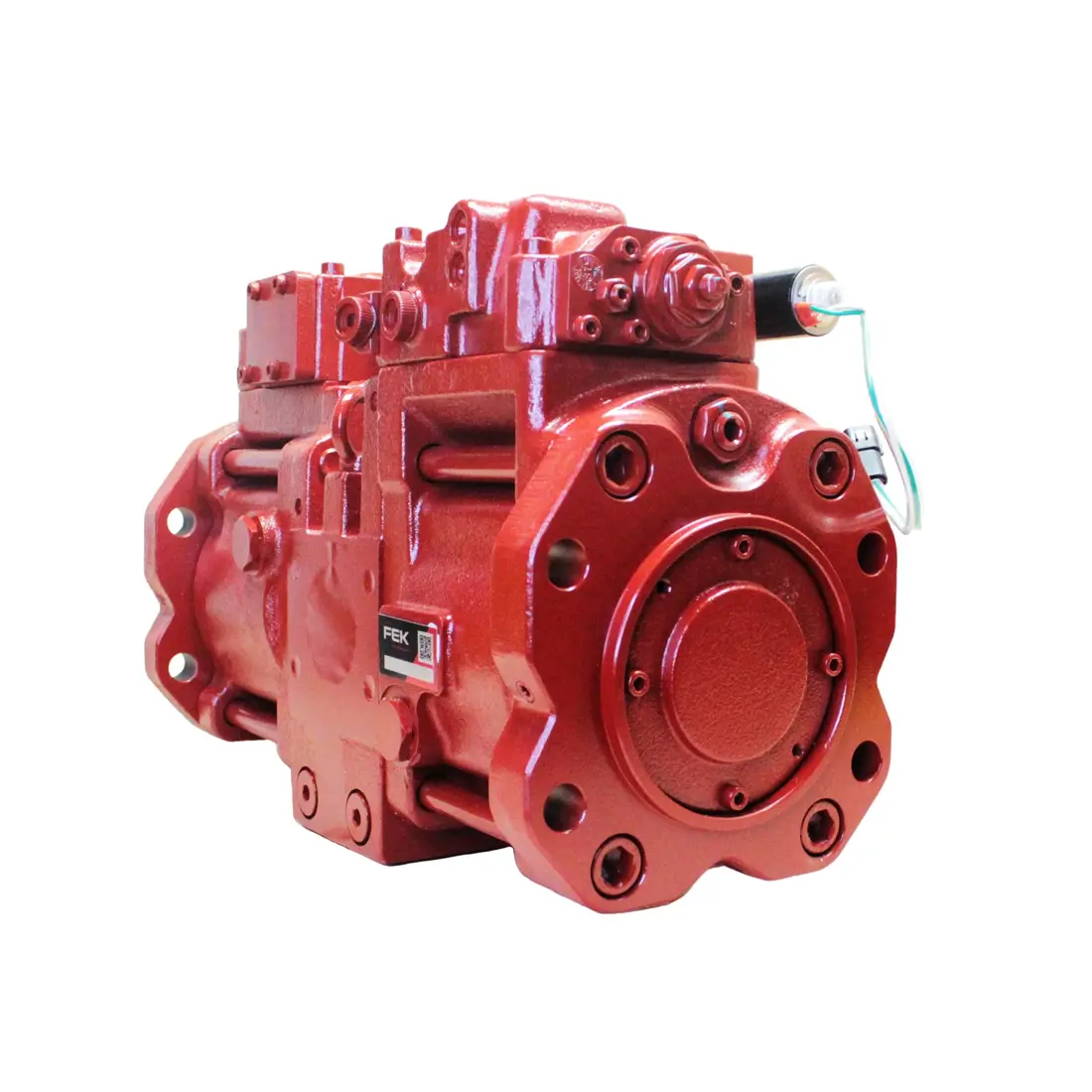
Variable displacement with a regulator. The main circuits of many excavators.
Principle
Flow and pressure are not the same thing
The pump pushes oil into the circuit, so it supplies flow. Pressure builds when the flow meets resistance from the load, and the relief valve limits it. A pump has no pressure of its own.
In the scene below the swashplate angle sets the piston stroke, and with it the displacement. The second view shows a gear pump, where flow comes from fixed gear geometry.
Pump type
Relative displacement (an example, not an FEK parameter):
Unrolled view of an axial piston pump: pistons in a rotating barrel slide over a stationary swashplate. Moving out, they draw oil in; moving in, they push it to the port. The larger the plate angle, the longer the stroke and the larger the displacement.
Change the angle with the slider and watch the piston stroke grow. Switch the pump type to compare with a gear pump.
Flow ≈ displacement × speed: at constant speed it grows with plate angle. Pressure comes from the load, not the pump.
Designs
Gear, vane and axial piston pumps
Machine hydraulics uses several designs. The differences matter when you read a nameplate.
External and internal gear
Simple, fixed displacement. Oil is carried between the teeth and the housing. Typical of auxiliary and simpler circuits.
Vane
Vanes in a rotor extend to a ring. Smooth running, fixed or variable displacement depending on the design.
Axial piston
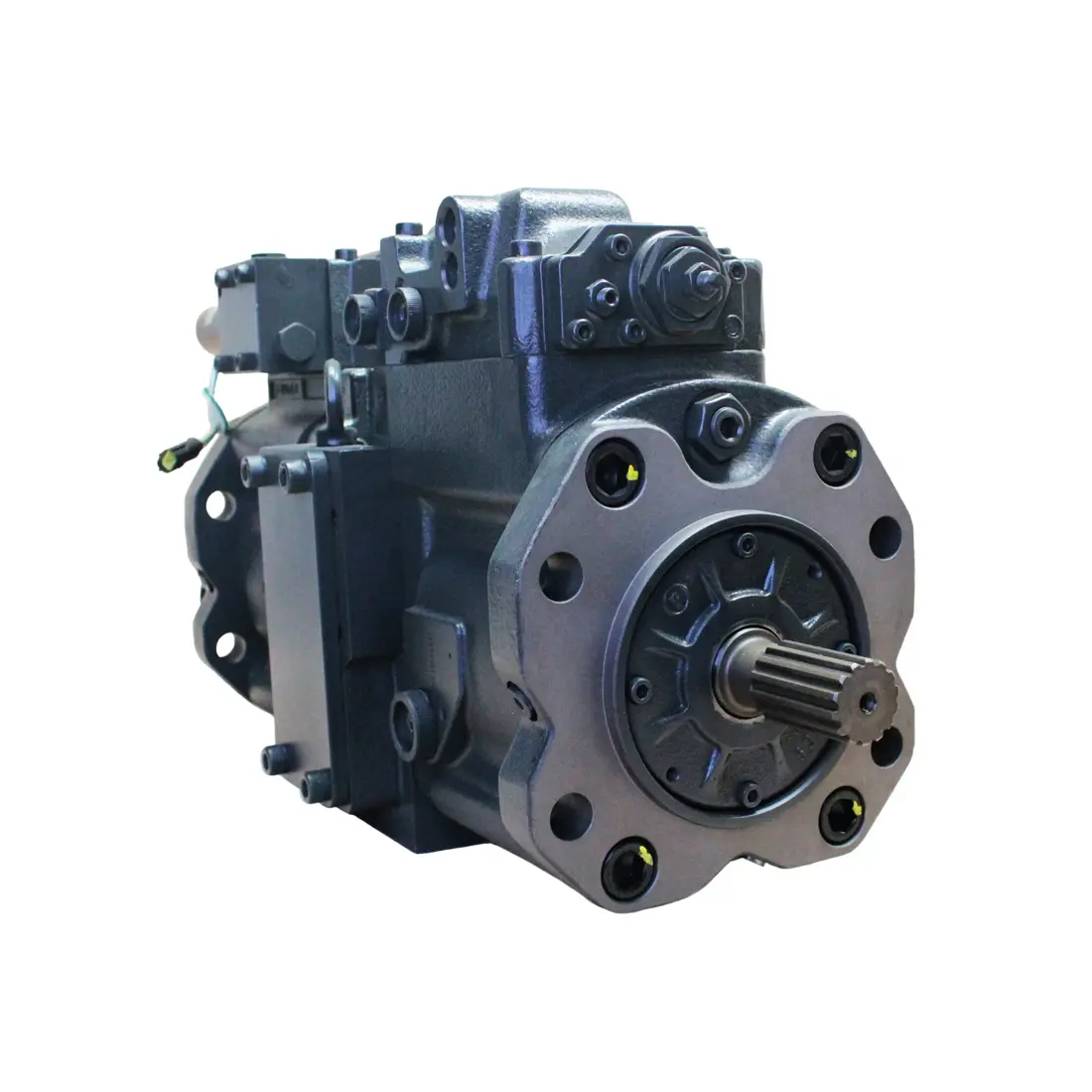
Pistons in a cylinder block, driven by a swashplate or a bent axis. Fixed or variable displacement, often with a pressure, power or LS regulator.
Pumps can have one section or several. In pilot circuits one section feeds the controls.
Parameters
What describes a pump
Read
- geometric displacement (cm³/rev) from the nameplate or documentation
- flow and working speed
- direction of rotation, viewed from the shaft end
- continuous and peak pressure as the pump manufacturer states them
- shaft, flange, ports and case drain
- regulator: pressure, power, LS
- open or closed circuit, fluid and temperature
Confirm before you decide
- a replacement based on appearance alone
- regulator compatibility with the machine control
- a fault cause without measurements and machine data
Valves
How a pump and a valve differ
Pump
Creates flow. Driven by the engine. Rated by displacement and speed. Does not set the pressure: the load does.
Valve
Decides what the flow does. Not driven. Directs it, limits its pressure, holds it or shares it. Never creates flow.