
Home / Applications and symptoms
Applications
Excavators, mini excavators, loaders, backhoe loaders.
Where the circuit works on each machine, and how to approach a symptom: start from the data, not from a guess.
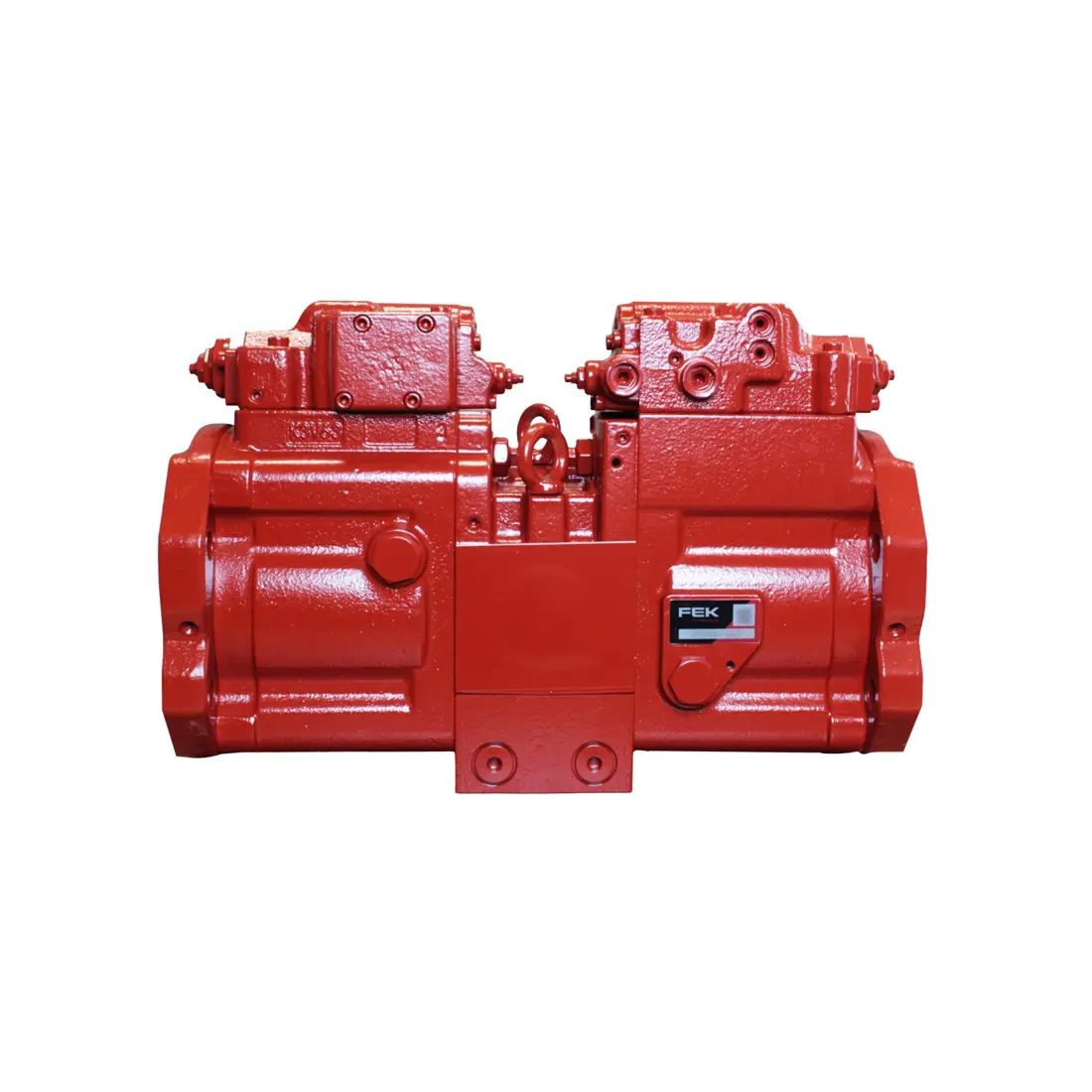
Machines
Where the circuit works
The hydraulic system moves the boom, arm, bucket, attachments and the controls. Large excavators, mini excavators, loaders and backhoe loaders differ in control layout, and so in what they ask of the pump.
Boom, arm, bucket
Double-acting cylinders, large loads and buckling.
Attachments
Extra circuits, flow and pressure depending on the tool.
Control
Valves, regulators and LS or pilot signals.
Functions
Machines and the movements they drive
Excavator
Boom, arm, bucket, swing, travel and attachments. Cylinders move the boom, arm and bucket; the control valve sends the flow.
Mini excavator
The same functions in a compact machine, plus blade and boom swing. Pump flow is shared across the circuits.
Loader
Lift, tilt, steering and attachments. Steering is a typical case for a priority valve.
Backhoe loader
Loader lift and tilt, backhoe boom, dipper and bucket, stabilisers and swing: many cylinders on one control.
Symptoms
Symptom, possible causes, data to collect
Slow movement
Possible causes: Internal leakage, wear, settings, a clogged filter or too little flow.
Data to collect: Which movement, oil temperature, duration, nameplate photos.
Noise
Possible causes: Cavitation or aeration, suction problems, oil level and condition.
Data to collect: When it occurs, from where, oil and filter condition.
High temperature
Possible causes: Relief valve spill, internal leakage, cooling, oil.
Data to collect: Temperature and load, running time, last oil change.
Boom drifting down
Possible causes: Leaking cylinder seals or a load-holding valve.
Data to collect: Whether it drifts under load, how fast, which cylinder.
A symptom does not identify the part. Measurements and machine data do.
Work on a hydraulic system only as the machine manufacturer instructs, and only after the pressure has been released safely.
Cleanliness
Contamination and filtration
Particles in the oil wear pumps, valves and seals. Air or vapour in the oil causes cavitation and aeration. Before judging a pump, check the oil level, the oil condition and the filters. Oil cleanliness is described by the ISO 4406 code; the machine manual gives the target.